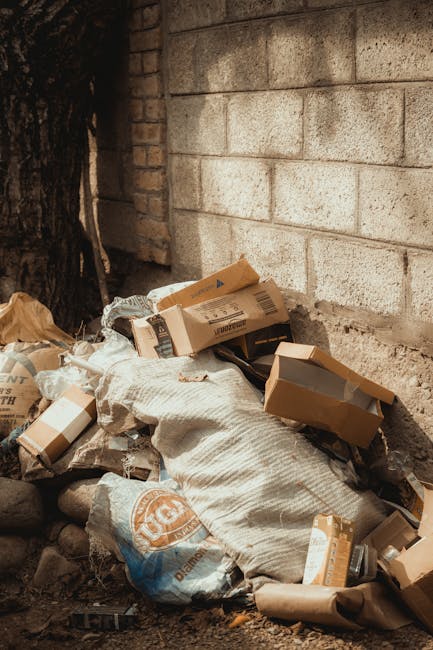
Avoid hidden fees in Sutton rubbish removal: what to know before you book
If you are trying to avoid hidden fees in Sutton rubbish removal, what to know is surprisingly straightforward once you know where extra charges usually creep in. A quote can look fine at first glance, then suddenly the price changes because of access, load size, waiting time, or items that need specialist handling. Annoying? Absolutely. Common? Also yes.
This guide walks you through the practical stuff: how rubbish removal pricing usually works, what to check before booking, which fees are worth questioning, and how to compare providers without getting lost in the jargon. Whether you are clearing a flat, dealing with garden waste, or getting rid of bulky furniture after a weekend sort-out, a little clarity goes a long way. Truth be told, the cheapest quote is not always the cheapest job.
We will also touch on useful related pages such as pricing and quotes, waste removal, and recycling and sustainability so you can make a better decision with fewer surprises.
Table of Contents
- Why hidden-fee awareness matters
- How rubbish removal pricing works in practice
- Key benefits of checking the fine detail
- Who this is for and when it makes sense
- Step-by-step guidance to avoid surprise charges
- Expert tips for better results
- Common mistakes to avoid
- Tools, resources and recommendations
- Law, compliance, standards and best practice
- Options and comparison table
- Case study or real-world example
- Practical checklist
- Conclusion
- Frequently asked questions
Why hidden-fee awareness matters
Hidden fees matter because waste removal is often booked at the exact moment you are already busy, stressed, or trying to finish a job quickly. Maybe the spare room is full of broken chairs and a heavy wardrobe. Maybe the loft is finally being tackled after years of being ignored. The last thing you need is a vague estimate that becomes a much bigger bill once the crew arrives.
In Sutton, like anywhere else, rubbish removal can involve more variables than people expect. A firm quote may depend on how much waste there is, what type it is, how easy it is to access, and whether any items need extra care. If those details are not clear, a provider may add costs later. Sometimes that is fair enough. Sometimes it is just poor communication. Either way, the customer feels caught out.
There is another reason this matters: a clear, transparent price often signals a more organised business overall. If pricing is fuzzy, service quality can be fuzzy too. That does not mean every budget provider is unreliable, of course. But if you have ever been hit with a "we did not realise there were stairs" fee, you will know why clear expectations are worth their weight in gold.
Expert summary: the best way to avoid hidden charges is to make the job as specific as possible before booking. Describe the waste, the access, the location, and any awkward items. Small details now can save a lot later.
How rubbish removal pricing works in practice
Most rubbish removal companies base pricing on a mix of volume, labour, disposal type, and access. That sounds simple, but it is the details that matter. A quote is rarely just "how much rubbish" in the abstract. It is "how much rubbish, what kind, where it is, how hard it is to collect, and what happens to it next."
Here are the most common pricing components you will come across:
- Load size or volume: how much space your waste takes up in the vehicle.
- Labour: how many people are needed and how long the job takes.
- Item type: furniture, appliances, builders' waste, garden waste, or mixed rubbish.
- Access factors: stairs, narrow hallways, parking difficulty, long carrying distances, or no lift access.
- Special handling: items that need extra care, such as appliances, confidential material, or potentially hazardous waste.
- Disposal route: what happens after collection, including sorting, recycling, and lawful disposal.
That is why two jobs that look similar at first glance can have very different prices. A neat stack of bagged waste by the driveway is not the same as a full loft clearance with broken wardrobes, damp boxes, and a staircase that seems determined to win. Let's face it, the stairs always matter.
For jobs involving a flat or shared building, it can help to review a relevant service page such as flat clearance or home clearance so you can think through access, room-by-room volume, and any extra lifting before requesting a price.
Where hidden fees usually appear
Hidden fees are often just poorly explained fees. The difference is important. If a company tells you upfront that an item type or access issue will cost more, that is transparent pricing. If the price changes after the job starts and nobody has clearly explained why, that is where trust starts to slip.
Common examples include:
- charges for heavy or awkward items that were not mentioned beforehand
- extra cost for carrying waste down stairs or over long distances
- fees for waiting if the site is not ready when the team arrives
- added disposal charges for mattresses, fridges, or similar items
- higher rates for mixed waste compared with clean, separated loads
- charges for items that need special handling or cannot be taken as standard waste
The key is not to panic at the idea of extra fees. Some are perfectly reasonable. The real issue is whether they are disclosed clearly before anyone starts loading the van.
Key benefits of checking the fine detail
Taking a few minutes to check the pricing detail can save you money, yes, but it also saves time and hassle. There is something oddly calming about knowing the final figure before the van turns up. You can plan, clear the space, and get on with your day.
- Better budgeting: you know what to expect before booking.
- Fewer disputes: there is less room for disagreement later.
- Cleaner comparison: you can compare providers on the same terms.
- Faster collections: if the team knows exactly what to expect, the job usually runs smoother.
- More confidence: transparency builds trust, and rightly so.
- Less stress: no awkward conversations when the bill arrives.
There is also a practical benefit people overlook: better information tends to lead to better service. If you are upfront about what you need removing, the company can send the right team, plan the load properly, and avoid that irritating "oh, we should have brought another vehicle" moment.
If you are dealing with specific items, it may be worth looking at pages like furniture disposal, fridge and appliance removal, or mattress and sofa disposal to understand how different item types are typically handled.
Who this is for and when it makes sense
This advice is for anyone booking rubbish removal in Sutton who wants a clean, simple, predictable experience. That includes homeowners, tenants, landlords, letting agents, office managers, shop owners, and tradespeople. In our experience, the people who benefit most are the ones dealing with a mixed load and a tight deadline. Those are exactly the jobs where assumptions cause trouble.
It makes sense to be extra careful if you are:
- clearing a property after a move
- emptying a loft, garage, shed, or storage space
- getting rid of bulky furniture or white goods
- managing post-refurbishment waste
- removing waste from a rental property before handover
- sorting out business waste or office clutter
For example, a landlord clearing out a flat after a tenancy might assume the waste is mostly bags and a chair or two. Then the team arrives and finds a broken bed frame, a mattress, an old fridge, and a pile of damp boxes in the hallway. That is not a disaster, but it is exactly the kind of moment where pricing needs to be clear.
Related service pages such as house clearance, office clearance, or business waste removal can also help you match the right service to the type of job you actually have, not the one you hope you have.
Step-by-step guidance to avoid surprise charges
If you want to keep the process simple, use this practical order. It sounds basic, but basic is often where the savings live.
- List everything that needs to go. Do not guess. Walk through the rooms or space and note the items.
- Separate standard waste from special items. Furniture, appliances, builders' debris, garden waste, and confidential papers should not be treated as the same thing.
- Check access carefully. Stairs, narrow lifts, parking restrictions, basement rooms, and long walks from the vehicle all matter.
- Ask what the quote includes. Loading, labour, disposal, and VAT or other charges should all be clear.
- Ask what could change the price. This is the big one. You want to know the triggers before the team arrives.
- Send photos if possible. Good photos make quoting much more accurate. A slightly messy image is better than a polished guess.
- Get the final terms in writing. Even a short written confirmation can prevent confusion later.
- Prepare the waste area. Move accessible items together if you can, and keep paths clear.
A useful habit is to ask, "What would make this price go up?" That single question can save a headache. If the answer sounds vague, keep asking. Not aggressively, just plainly. You are not being difficult; you are being sensible.
For more context on what can be removed in different settings, you may find garage clearance, loft clearance, or garden clearance useful depending on the space you are tackling.
Expert tips for better results
After seeing a fair few clearances, the same mistakes come up again and again. The good news is they are easy to avoid once you know where to look.
- Describe the worst-case access, not the best-case. If the lift is small or the parking is awkward, say so.
- Assume mixed waste costs more than sorted waste. This is not always true, but it often helps to separate recyclable items where possible.
- Be specific about special items. A fridge is not the same as a dining chair, and a mattress is not the same as a pile of cardboard.
- Take photos in good light. Morning light by the window beats a dark hallway snapshot every time.
- Ask about minimum charges. Some smaller jobs are priced by load size, but others have a minimum call-out or collection value.
- Check how payment works. A secure process and clear payment terms are part of a trustworthy service. See payment and security for a useful reference point.
One practical tip that saves a surprising amount of grief: if you are doing a clearance over a weekend or after work, do the sorting before the appointment day. Standing in front of a van while deciding which pile counts as "miscellaneous junk" is not fun. It never is.
If sustainability matters to you, look for a provider that explains recycling and sorting clearly. A bit of transparency here goes a long way, especially for people who would rather not send everything straight to landfill. The page on recycling and sustainability is a helpful place to understand that approach.
Common mistakes to avoid
Most surprise fees happen because of assumptions, not bad intentions. That is frustrating, but also fixable.
1. Booking on price alone
A very low quote can be genuine, but it can also hide conditions that only appear once the job begins. If a quote seems unusually cheap, check what is excluded.
2. Underestimating volume
People often describe waste in vague terms like "a bit of furniture" or "some rubbish in the garden." That is too fuzzy for an accurate price. A rough count of items is better than nothing.
3. Forgetting about access
If the team has to carry items down three flights of stairs, over a shared courtyard, and out to a hard-to-find parking spot, that is a different job. Say it upfront.
4. Mixing standard items with restricted ones
Appliances, certain chemicals, and other specialist items may need separate handling. If you are unsure, ask before the day arrives.
5. Ignoring the terms and conditions
Yes, it is the least thrilling thing in the world. Still, it often explains how pricing, access, cancellations, and responsibility are handled. You do not need to read every line like a detective, but skimming the key points is worth it. The same goes for terms and conditions and the company's complaints procedure if you want to understand what happens when something goes wrong.
Tools, resources and recommendations
You do not need fancy software to avoid hidden fees. A phone, a few photos, and a short checklist will do the job nicely.
| Tool or resource | Why it helps | Best used for |
|---|---|---|
| Phone photos | Gives the provider a clearer view of waste type, size, and access | All collections, especially mixed loads |
| Room-by-room list | Stops you forgetting items tucked away in corners, cupboards, or the loft | House, flat, loft, and garage clearances |
| Short written quote summary | Reduces confusion about what is included | Comparing multiple providers |
| Access notes | Highlights stairs, parking, or carrying distance | Flats, offices, and properties with awkward entry |
| Service-specific page | Helps you match the job type to the right service | Furniture, builders' waste, appliances, and more |
There are also a few site pages that can help you prepare better for certain jobs. If you are disposing of awkward items, what can go in a skip can be a handy point of reference for understanding item types, while builders waste clearance can be useful if the job involves refurbishment debris rather than household clutter.
If you prefer to plan ahead rather than deal with the stress on the day, you can also review book online once you have the details ready. Simple enough. And honestly, calmer too.
Law, compliance, standards and best practice
For rubbish removal, compliance is about more than "taking the stuff away." Waste must be handled responsibly, and reputable providers should be able to explain how they manage it. The exact legal duties vary depending on the waste type and the job, so it is sensible to be cautious rather than overconfident.
As a customer, your main job is to make sure you are booking a legitimate, transparent service and that you are not passing over waste that needs special treatment without saying so. This is especially important for items that may be considered hazardous or require separate handling. If you are unsure whether something is suitable for standard collection, ask first rather than assuming. That small pause can prevent a mess later.
Best practice usually includes:
- clear pricing before the work begins
- honest descriptions of item types
- safe loading and lifting practices
- appropriate handling of restricted items
- responsible disposal and sorting where possible
- clear communication about any extra charges before they are applied
Where safety is involved, it is also sensible to look at a company's health and safety policy and insurance and safety information. Those pages do not replace a proper conversation, but they do help you judge whether the provider takes the basics seriously. And you want that. You really do.
If your waste includes items that may need specialist attention, such as certain chemicals or contaminated materials, review hazardous waste disposal rather than assuming a standard rubbish collection is enough.
Options and comparison table
There is no single right way to clear waste. The best option depends on how much you have, how fast you need it gone, and how hands-on you want to be.
| Option | Best for | Pros | Watch out for |
|---|---|---|---|
| Full rubbish removal service | Mixed waste, bulky items, quick turnaround | Fast, labour included, less effort for you | Can be more expensive if access or waste type is unclear |
| Specialist item removal | Fridges, sofas, mattresses, appliances | Handled with the right equipment and knowledge | Item-specific pricing may apply |
| Room or property clearance | Lofts, garages, flats, whole homes | Convenient for larger jobs | Volume and access details must be accurate |
| Self-sorting before collection | People with time to prepare | Can reduce labour and make quoting easier | Requires effort and good organisation |
If you are deciding between a service-led collection and something more item-specific, the pages on furniture clearance and furniture disposal are useful for understanding how different approaches fit different jobs. Small detail, but it matters.
Case study or real-world example
A couple in Sutton decided to clear their spare bedroom before a family visit. On paper, it sounded simple: one chest of drawers, a worn armchair, a few bags of mixed clutter, and an old bedside table. They received a quick quote and nearly booked immediately. Then they paused and sent a few photos.
That turned out to be the smart move. The room was on the second floor, the staircase was narrow, and there was no convenient parking directly outside. One of the items was also a heavier sofa-style chair, not the lightweight chair they had first described. The revised quote reflected the extra carrying time and the heavier item, but it was explained before the team arrived. No drama. No awkwardness. Just a clear, predictable job.
What changed? They stopped describing the waste in general terms and started describing the reality of the job. Not perfect. Not fancy. Just accurate. That is usually all it takes.
Another common example is a landlord clearing out a flat after tenants move out. If the space includes a mix of furniture, bags, and a couple of appliances, the best result comes from naming each category early and checking the access route. If the job also involves office items or paperwork, it may be worth considering confidential shredding as part of the wider clearance plan.
Practical checklist
Use this checklist before you confirm the booking. It is simple, but it works.
- Have I listed every item that needs removing?
- Have I separated bulky items, appliances, and special waste?
- Have I described access honestly, including stairs and parking?
- Do I know what the quote includes?
- Have I asked what could increase the price?
- Have I shared photos if the job is hard to describe?
- Have I confirmed the time, date, and collection process?
- Do I understand how payment will be taken?
- Have I checked the company's terms and conditions?
- Do I know who to contact if something is unclear on the day?
A quick note here: if your job involves a flat, a loft, or a garage packed with odd bits and pieces, it is worth checking the relevant service page before you book. A little prep at this stage saves a surprising amount of back-and-forth later.
Get a free quote today and see how much you can save.
Conclusion
Avoiding hidden fees in Sutton rubbish removal comes down to one thing: clarity. Clear descriptions, clear access details, clear pricing, and clear expectations. That is the whole game, really. If you give a provider the right information, and they give you a proper written breakdown in return, most of the common surprises simply disappear.
Do not rush the quote stage. Ask the awkward question if you need to. Double-check the special items. Make sure the price makes sense for the actual job, not the version of the job you hope it is. There is nothing glamorous about this process, but there is a lot to be said for finishing it without a nasty surprise on the invoice.
And once it is done, there is a strange little relief in the empty space left behind. A cleared room, a tidy drive, a clean corner of the garden. Small win, but a good one.
Frequently Asked Questions
What are hidden fees in rubbish removal?
Hidden fees are extra charges that were not made clear before the job began. They might be linked to access, item type, waiting time, heavier loads, or special disposal requirements.
How can I tell if a Sutton rubbish removal quote is fair?
A fair quote should explain what is included, what is not included, and what could change the price. It should make sense for your waste type, access conditions, and collection needs.
Should I send photos before booking a collection?
Yes, if you can. Photos help the provider judge volume, item type, and access more accurately. That usually leads to a better quote and fewer surprises on the day.
Do stairs usually cost extra?
Sometimes they do, depending on the provider and how difficult the job is. A short stair carry might be included, while a long carry or several flights could affect the price.
Are appliance removals priced differently?
Often, yes. Items like fridges and other appliances may need different handling from general household waste, so they can be priced separately or treated as a specialist item.
What if I have mixed waste from a loft or garage clearance?
Mixed waste is common, especially in loft and garage jobs. The best approach is to describe everything honestly and check whether the provider needs separate details for bulky, heavy, or restricted items.
Can a rubbish removal company change the price after arriving?
They may adjust the price if the actual job is significantly different from what was described, but that should be explained clearly. If the change feels unexplained, ask for the reason before agreeing.
Is it cheaper to sort waste before collection?
Often it can be, because sorted waste is easier to handle and may reduce labour. It is not always essential, but it usually helps the quoting process.
What should I check in the terms and conditions?
Look for payment terms, cancellation rules, access requirements, what counts as extra work, and how disputes are handled. Those sections can save a lot of confusion later.
How do I know if a company handles waste responsibly?
Look for clear explanations about disposal, recycling, and safety. A company that is open about its process usually feels more trustworthy than one that stays vague.
What if I am not sure whether something counts as hazardous waste?
Do not guess. Ask before booking. Some items need special handling, and it is better to clarify early than risk an unsuitable collection.
What is the best first step if I want to avoid hidden fees?
Make a proper item list, include access details, and ask for a written quote that explains possible extras. That one habit prevents most pricing surprises.